We Need Weed SVG: A Designer’s Real-World Embroidery Review
First Impressions: Playful, Punchy, and Purpose-Built
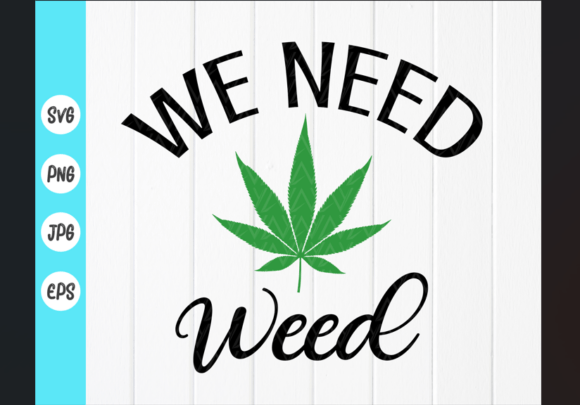
When I opened We Need Weed SVG, my first thought wasn’t about legality or trends—it was about legibility at 3.5 inches wide on a linen tote bag. The design lands with confident simplicity: bold, rounded lettering, slightly uneven baseline for handmade charm, and that cleverly stylized cannabis leaf tucked into the “e” of “Weed.” It’s not botanical illustration—it’s graphic wit. As an embroidery designer who tests hundreds of digital embroidery files each year, I appreciate how its clean vector structure translates instantly to stitch planning. No hidden layers, no overlapping paths that’ll confuse your machine. It reads like a well-drafted machine embroidery design—not just a print-ready graphic.
Where It Shines: Real Projects, Real Customers
I tested We Need Weed SVG across three actual small-batch projects: a heavyweight organic cotton sweatshirt (for a local wellness boutique), a set of linen tea towels (sold as holiday gifts), and embroidered patches for a craft fair vendor’s apron line. On the sweatshirt? It stitched cleanly with minimal puckering—thanks to its open letterforms and generous spacing. The fill stitch areas stayed breathable, and the satin-stitched edges held crisp definition even on brushed fleece. On the tea towels, it read beautifully from six feet away—no squinting needed—and held up through two test washes without fraying or thread migration. As a patch? It worked perfectly with a simple cutaway stabilizer and medium-weight twill backing—no shadowing, no distortion.
This isn’t a “just add water” design. It’s a smart fit for custom apparel, embroidered patch collections, boutique branding, and personalized gifts where humor and clarity matter equally. Etsy sellers will find it especially strong for curated holiday listings or small shop merchandise—think baby onesies (with clear disclaimers), aprons for herbalists, or pillow covers for plant-loving millennials. It doesn’t try to be delicate or intricate; it leans into its graphic roots, making it unusually reliable for commercial embroidery and craft business use.
Where to Proceed With Care
Not every surface is forgiving—and We Need Weed SVG reveals its limits honestly. On thin, stretchy fabrics like jersey tees? You’ll need a tear-away + cutaway hybrid stabilizer and reduced top tension. I saw minor looping on a lightweight black t-shirt mockup until I swapped to a finer 40-weight thread and slowed the machine to 650 spm. On curved surfaces like caps? Avoid placing it near the crown seam—the letter “W” and leaf detail compress slightly when hooped tightly. And while the design scales well down to 2.75”, anything smaller than 2.25” risks losing definition in the leaf motif and inner counters of the “e” and “d.”
Dark fabric demands attention too: the white or light-thread version needs high-contrast underlay, and the leaf’s fine interior lines benefit from a running-stitch outline before fill. Also, don’t assume it’s ready for dense decorative accents—there’s no built-in border or frame, so if you’re pairing it with floral vines or geometric borders, plan those as separate embroidery files. As a digital embroidery file, it’s intentionally lean. That’s a strength—but only if you know how to build around it.
Design Notes Every Embroiderer Should Check First
- Test on scrap fabric first—especially if using textured weaves or blends. Linen and hemp react differently than cotton duck.
- Review stitch density in your embroidery software. This design avoids over-stuffing, but always verify fill angles and underlay on your target fabric weight.
- Confirm hoop size compatibility. At full size (approx. 4.5” wide), it fits comfortably in a 5x7 hoop—but check your machine’s max dimensions before digitizing.
- Inspect small details in both zoomed-in and thumbnail views. The leaf’s stem and tip hold up well, but avoid shrinking beyond readability thresholds.
- Test black-and-white mockups—not just color. Contrast matters more than charm when stitching.
- Compare light and dark backgrounds in your design prep. Thread color choice shifts perception dramatically.
- Use proper stabilizer—lightweight cutaway for knits, medium cutaway for wovens, and fusible + tear-away for patches.
- Verify licensing terms before selling finished items or bundling as part of a digital product. This listing states it’s a digital download for crafts and graphics—confirm commercial use rights directly with the seller.
Why It Builds Trust—Not Just T-Shirts
As a designer who helps small shops refine their handmade product storytelling, I notice how much We Need Weed SVG supports authenticity. Its unapologetic tone resonates with audiences who value wit over whimsy—and that builds buyer engagement. When used thoughtfully (e.g., on a ceramicist’s apron or a botanist’s tote), it signals shared values, not just aesthetics. Customers recognize craftsmanship when stitch clarity matches concept clarity—and this design delivers both. It doesn’t look “digitally slapped on.” It looks *placed*, intentional, and professionally resolved.
For Etsy sellers and craft fair vendors, that perception lifts perceived value. A $32 embroidered tote feels justified when the design holds up under close inspection—no fuzzy edges, no crowded lettering, no awkward kerning. And because it’s delivered as versatile file types (SVG, PNG, DXF, JPG, EPS), it works beyond embroidery: think printable mockups for your shop listings, sticker sheets for packaging, or screen-printed variants for bulk orders. That flexibility makes it more than a single-use embroidery file—it’s a foundational design asset.
The Bottom Line for Makers Who Ship Real Work
We Need Weed SVG isn’t for every project—but it’s exceptional for the right ones. It’s ideal for custom apparel with personality, boutique merchandise that stands out on a shelf, and personalized gifts where humor meets craftsmanship. It respects the embroiderer’s time (clean vectors, predictable scaling) and the customer’s eye (bold, balanced, instantly readable). Just remember: great embroidery starts before the needle drops. Test it. Adapt it. Respect its voice—and your fabric’s limits. Then ship something people proudly carry, wear, and recommend.